ASR-11 Airport Surveillance Radar
Aviation & Air-Traffic-Control Antennas Microwave Directional SHF Aviation Radar
A modern digital S-band terminal radar combining primary and secondary surveillance.
- Band
- S-band (2.7-2.9 GHz)
- Gain
- ~32-33 dBi (high/low beam)
- Polarization
- Linear or circular (selectable)
Photos
Radiation / wave patterns
New to these diagrams? How to read a radiation pattern →
How & why it works
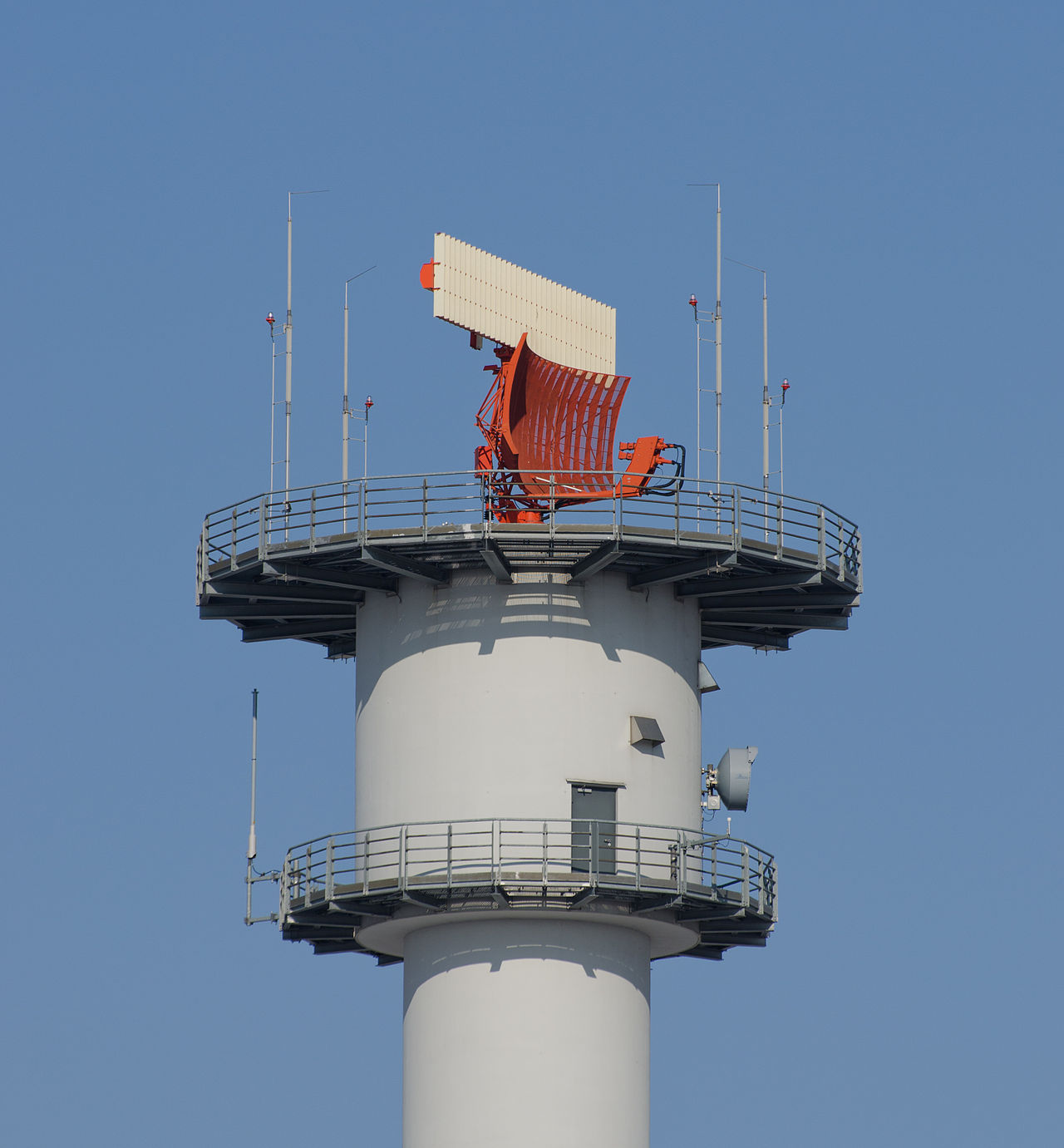
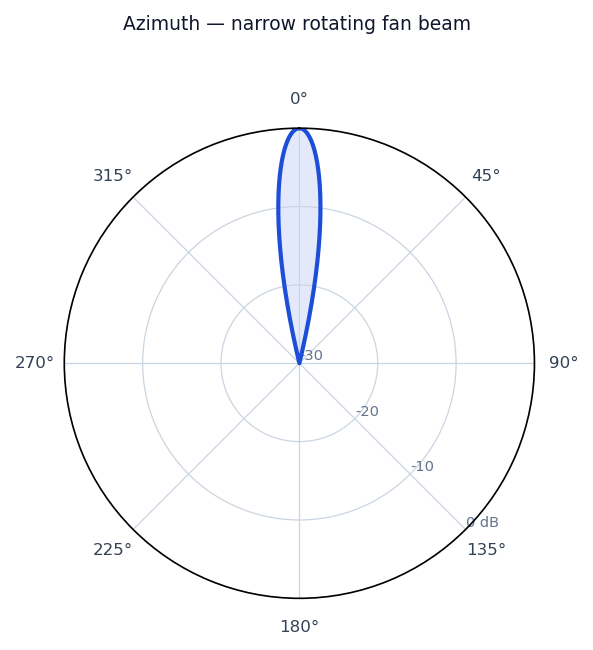
The ASR-11 is the digital successor to earlier terminal radars. Its tower-mounted, continuously rotating reflector uses two stacked feed horns to form a 'high beam' and a 'low beam'—the low beam looks near the horizon while the high beam covers steeper angles, and the receiver blends them to track aircraft cleanly from the runway threshold up to high altitude out to about 60 nautical miles. The azimuth beam is roughly 1.4 degrees wide with about 33 dBi of gain, polarization switches between linear and circular for weather, and a secondary radar (beacon) array rides on top of the same rotating structure to interrogate aircraft transponders.
Real-world uses
Combined primary + secondary terminal surveillance at modern airports, including many handling traffic like Calgary's.