Biquad
Directional Antennas Microwave Directional 🔧 Buildable at home
Two square loops over a reflector—an easy, effective microwave beam.
- Band
- SHF (e.g. 2.4 GHz)
- Gain
- ~10-12 dBi
- Polarization
- Linear
Photos
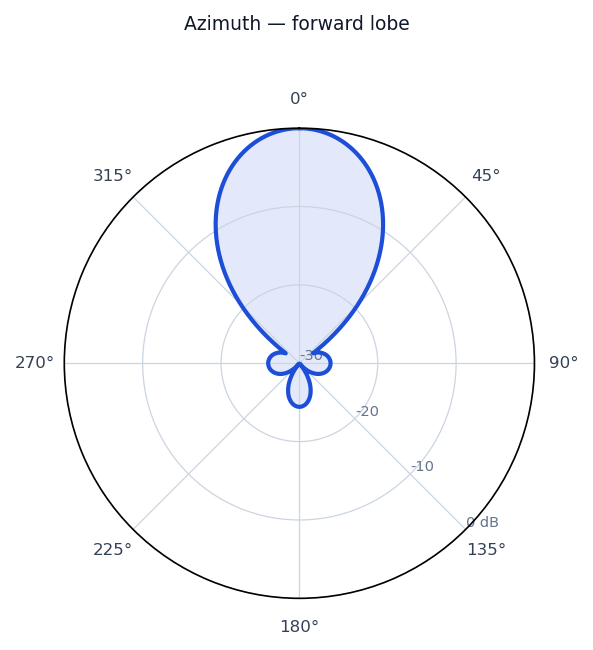
Radiation / wave patterns
New to these diagrams? How to read a radiation pattern →
How & why it works
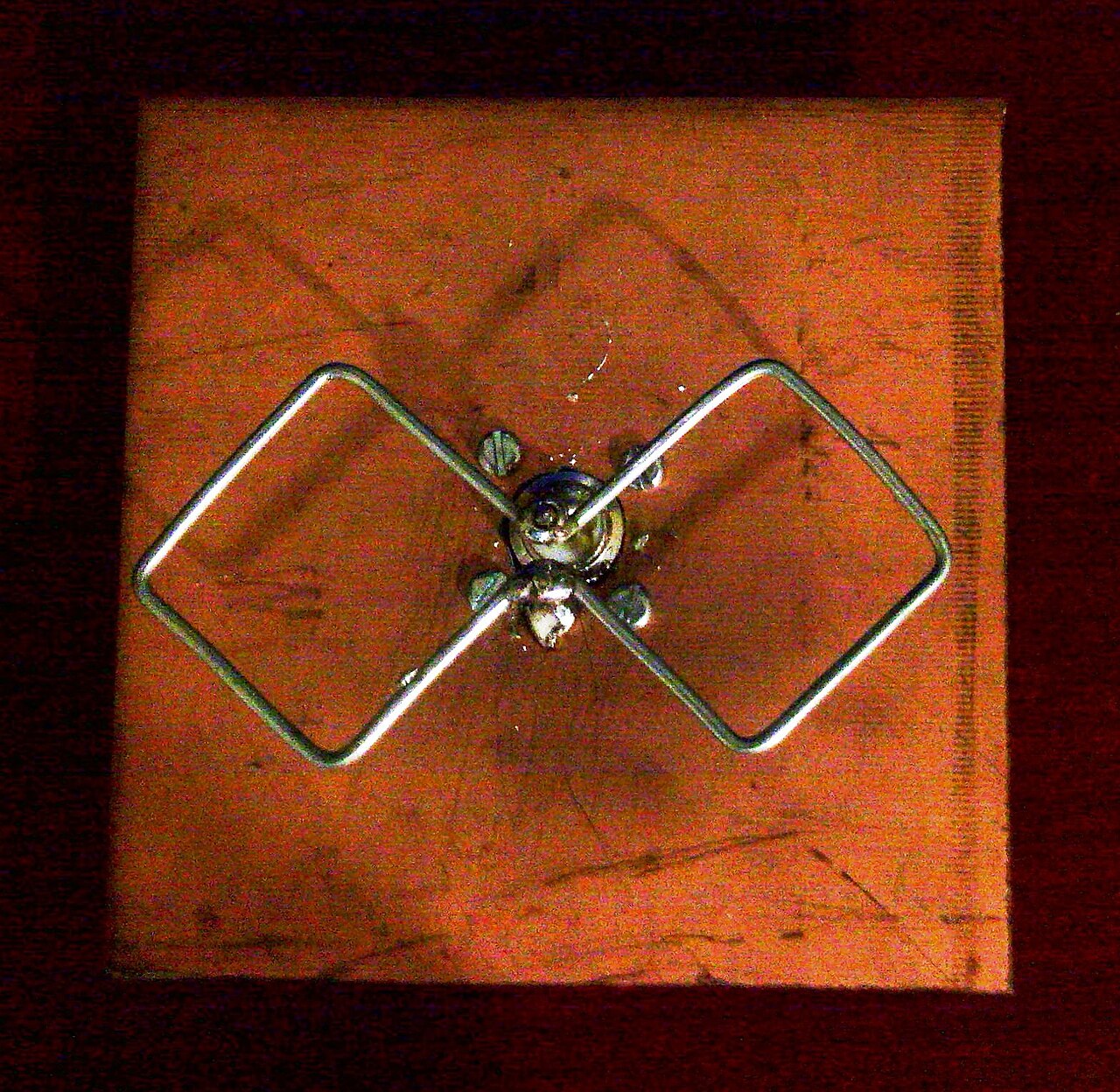
A biquad is built from a single wire bent into two side-by-side squares (each side about a quarter wavelength) mounted a fraction of a wavelength above a flat reflector plate. The two loops together form a full-wave radiator whose currents add in phase, and the reflector throws the pattern forward into a moderately directional beam. Its forgiving dimensions and 50-ohm-friendly feed make it a popular do-it-yourself antenna for 2.4 GHz.
Real-world uses
Wi-Fi links, drone control/video, and amateur microwave experimentation.
Make one at home
A practical starting point — always trim and check SWR for your exact frequency.
See the finished antenna pictured above ↑.
A biquad is a famous 2.4 GHz DIY antenna — two wire squares over a reflector, great for Wi-Fi links.
You’ll need
- Stiff copper wire (~1.2–2 mm), e.g. from house wiring
- A copper-clad board or a CD-case-sized metal reflector plate
- A short piece of coax + connector
Dimensions (2.4 GHz)
- Each of the 8 sides: 30.5 mm (a quarter wavelength)
- Reflector: ~110 × 110 mm
- Element-to-reflector spacing: ~15 mm.
Build
- Bend the wire into two adjacent squares (a ‘bowtie of squares’); the centre is where it feeds.
- Mount it ~15 mm above the reflector on the coax: centre conductor to one square, braid to the other.
Tune
Dimensions are forgiving; keep the 15 mm spacing close. Verify with an SWR/return-loss meter if you have one.
Safety
- Keep antennas well clear of power lines — never put one where it could fall onto or contact mains wiring.
- Don’t transmit while anyone is close to the antenna; mind RF-exposure limits and your local licensing rules.
- Ground masts and use coax surge protection where appropriate.
- Cutting/soldering: eye protection and a ventilated space.