Ground Plane Antenna
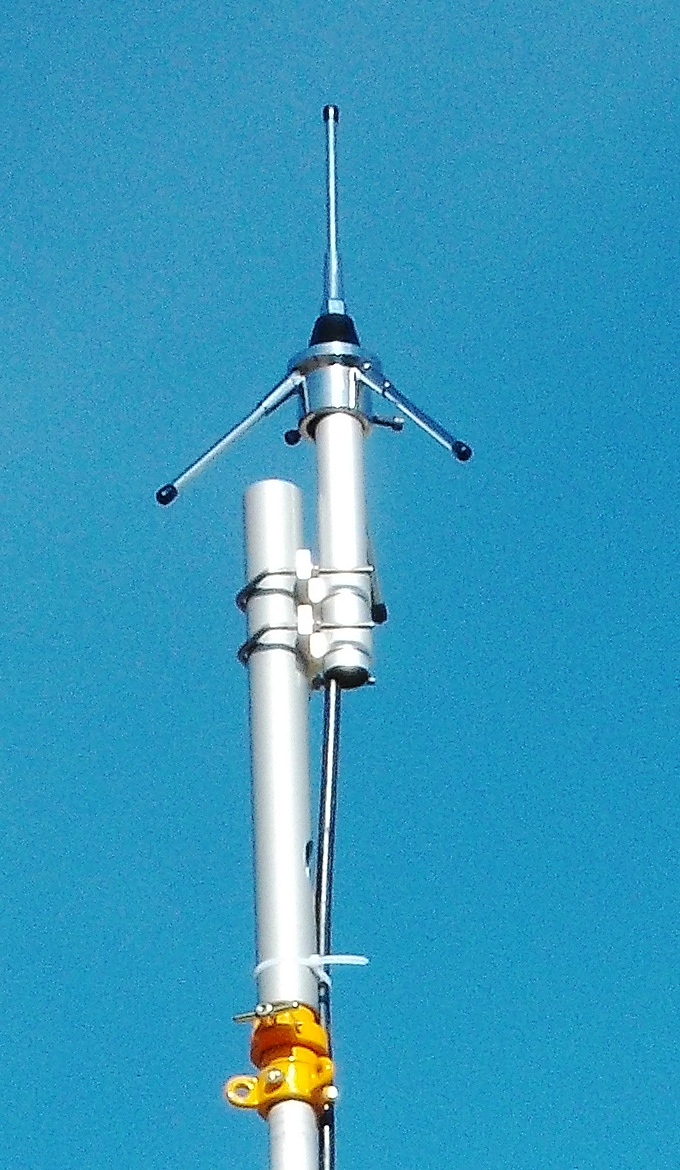
Vertical Antennas VHF UHF 🔧 Buildable at home
A quarter-wave vertical with radials that form an artificial ground.
- Band
- HF to UHF
- Gain
- ~1-3 dBi
- Polarization
- Vertical
Photos
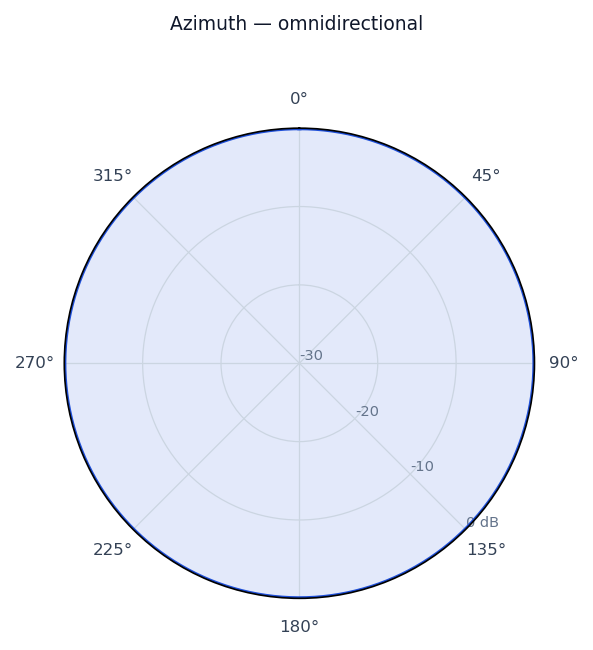
Radiation / wave patterns
New to these diagrams? How to read a radiation pattern →
How & why it works
A ground-plane antenna makes the monopole practical up in the air by replacing earth with three or four quarter-wave 'radials' that fan out from the base. These radials supply the return currents and define the image plane, so the antenna no longer depends on the soil beneath it. Sloping the radials downward raises the feedpoint impedance from about 36 ohms toward 50 ohms for a direct coax match, while preserving the low-angle, omnidirectional pattern that verticals are valued for.
Real-world uses
VHF/UHF base stations, scanner and repeater antennas, and elevated HF verticals.
Make one at home
A practical starting point — always trim and check SWR for your exact frequency.
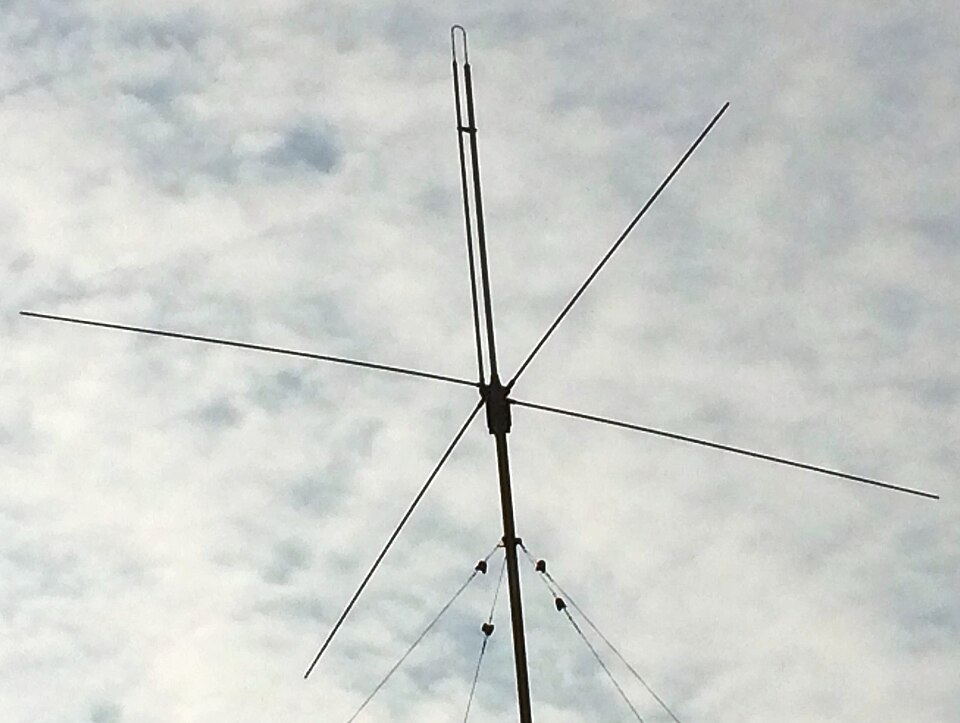
A ground-plane antenna makes a monopole work up in the air using radials instead of earth — a great VHF/UHF base antenna.
You’ll need
- An SO-239 chassis connector as the hub
- One vertical element + four radials, each ≈ 71.5 ÷ f(MHz) metres (radials a touch longer)
- Wire/brazing rod (welding rod works well at VHF/UHF)
Build
- Solder the vertical element to the SO-239 centre pin.
- Solder the four radials to the SO-239 mounting holes.
- Bend the radials down ~45° — this raises the feed impedance toward 50 Ω for a direct coax match.
Tune
Trim the vertical element for lowest SWR. Sloping the radials more/less fine-tunes the match.
Safety
- Keep antennas well clear of power lines — never put one where it could fall onto or contact mains wiring.
- Don’t transmit while anyone is close to the antenna; mind RF-exposure limits and your local licensing rules.
- Ground masts and use coax surge protection where appropriate.
- Cutting/soldering: eye protection and a ventilated space.