J-Pole
Vertical Antennas VHF Portable UHF 🔧 Buildable at home
An end-fed half-wave vertical matched by a quarter-wave parallel stub.
- Band
- VHF/UHF
- Gain
- ~2-3 dBi
- Polarization
- Vertical
Photos
Radiation / wave patterns
New to these diagrams? How to read a radiation pattern →
How & why it works
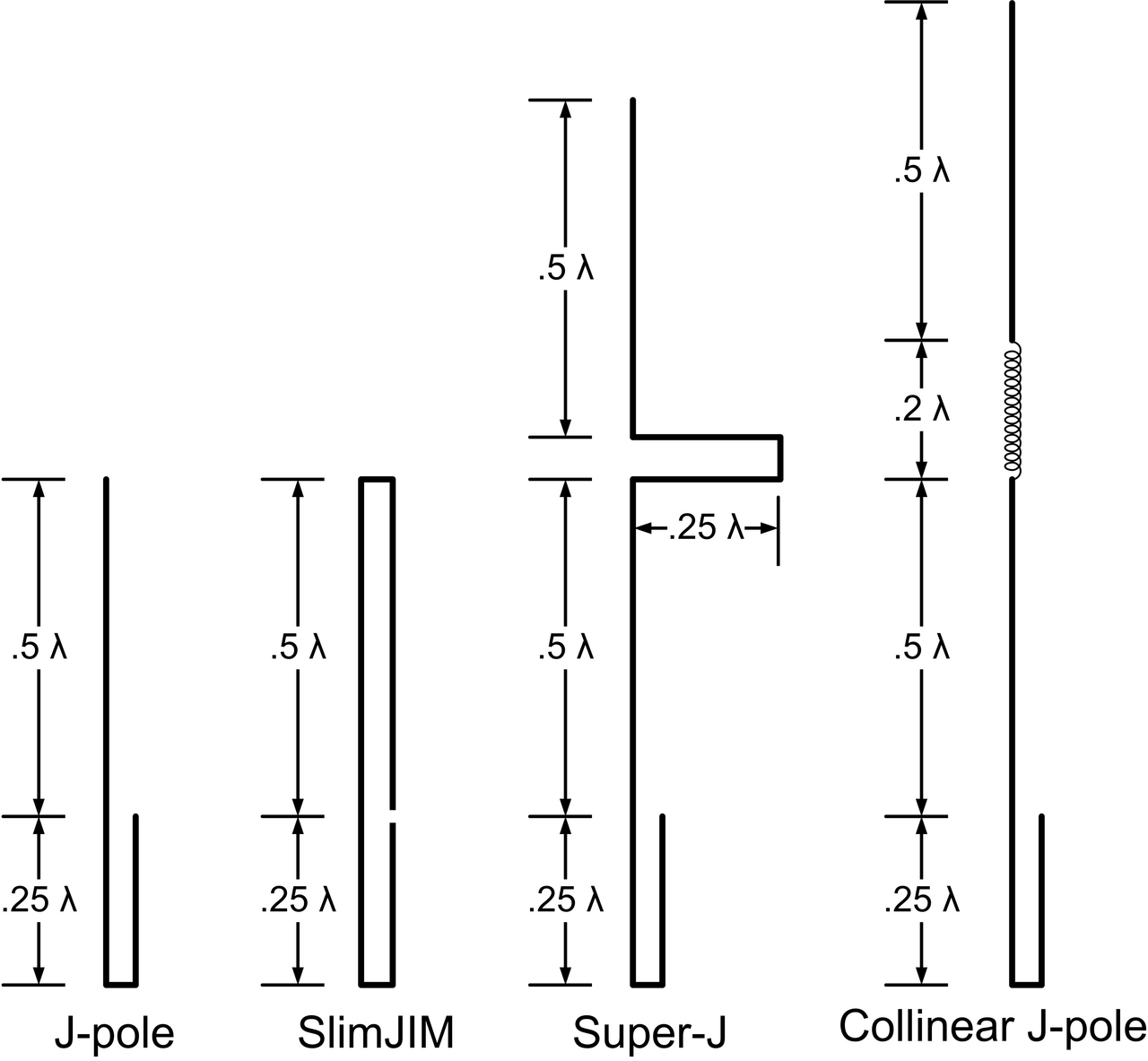
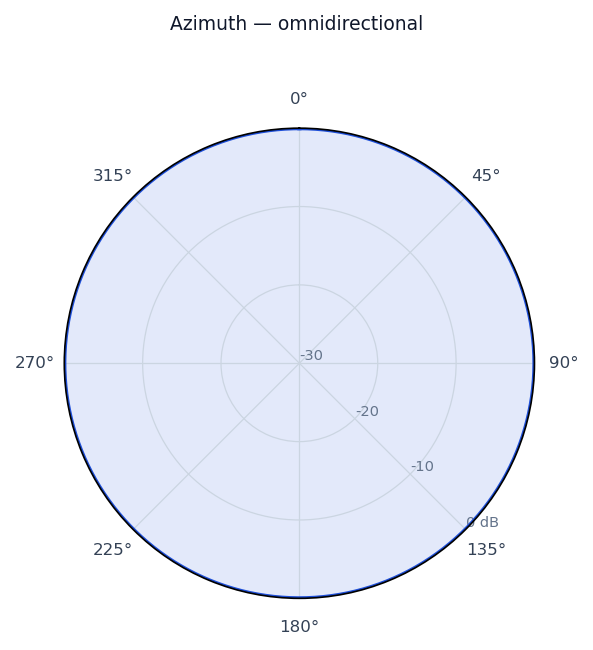
The J-pole is an end-fed half-wave radiator with a quarter-wave parallel-line matching stub at the bottom that gives the structure its J shape. The shorted stub transforms the high end-feed impedance down to 50 ohms and the half-wave radiator needs no radials, so the whole antenna is a single mechanical piece that is easy to build from copper pipe or twin-lead. It produces an omnidirectional vertical pattern with a touch more gain than a quarter-wave ground plane.
Real-world uses
2 m / 70 cm amateur base and portable antennas, and emergency 'roll-up' antennas.
Make one at home
A practical starting point — always trim and check SWR for your exact frequency.
See the finished antenna pictured above ↑.
A J-pole is an end-fed half-wave with a quarter-wave matching stub — no radials needed. A 2 m copper-pipe J-pole is a rewarding weekend build.
You’ll need
- 1/2-inch copper pipe + a tee and elbow, or 450-ohm ladder line for a ‘roll-up’ version
- A coax connector and a hose clamp or two
Dimensions (2 m / 146 MHz example)
- Long (half-wave) element: ~142 cm
- Short (quarter-wave stub) element: ~48 cm
- Spacing between them: ~5 cm
- Feed tap: ~5 cm up from the bottom short. (Scale by frequency for other bands.)
Build
- Join the long and short elements at the bottom with the tee so they run parallel, shorted at the base.
- Attach coax centre to one side and braid to the other at the feed tap, a few cm up; slide the clamps to adjust.
Tune
Move the feed tap up/down a centimetre at a time for lowest SWR.
Safety
- Keep antennas well clear of power lines — never put one where it could fall onto or contact mains wiring.
- Don’t transmit while anyone is close to the antenna; mind RF-exposure limits and your local licensing rules.
- Ground masts and use coax surge protection where appropriate.
- Cutting/soldering: eye protection and a ventilated space.