Phased Array
Array Antennas Microwave Directional Satellite
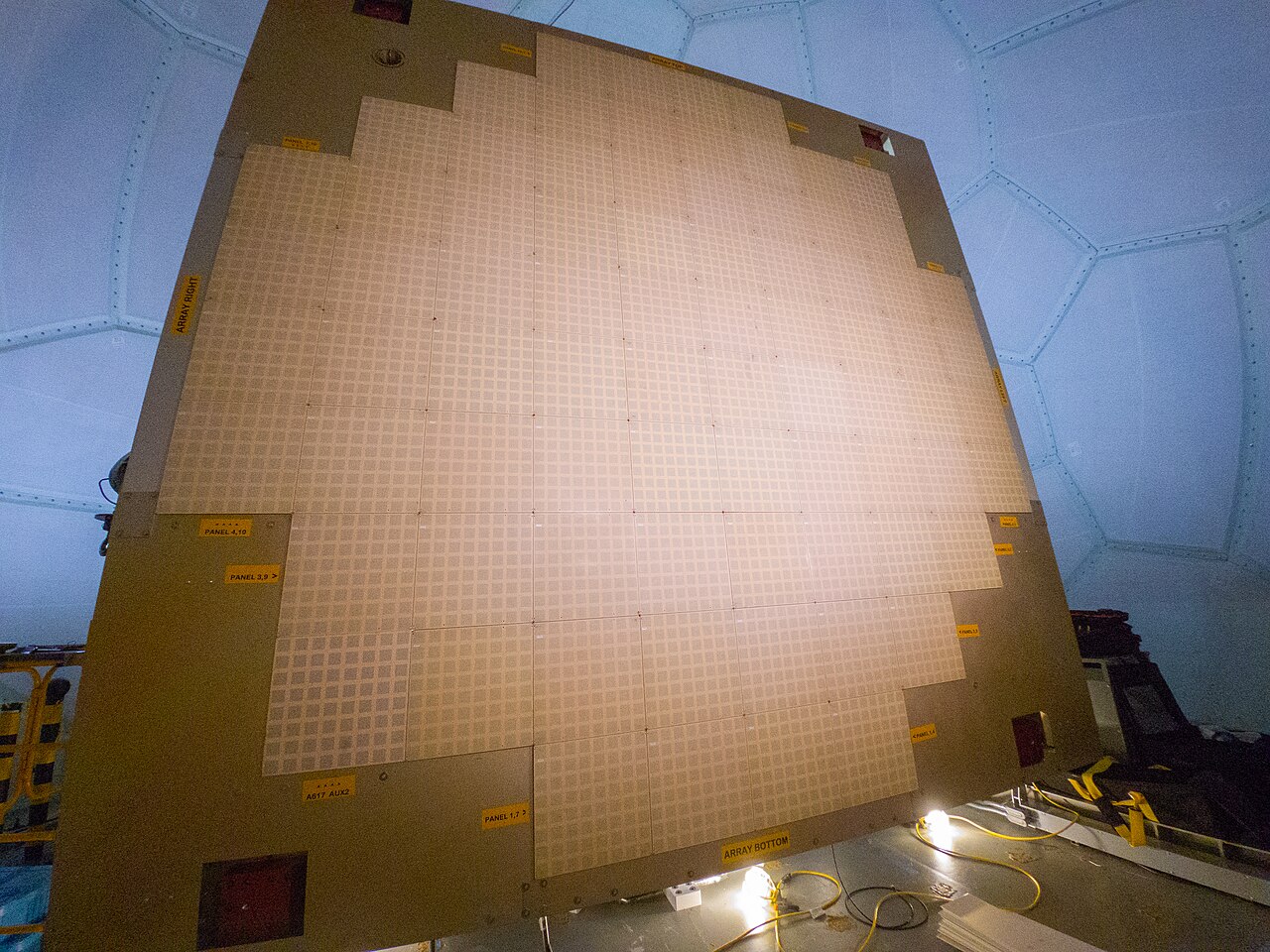
Many elements whose feed phases steer and shape the beam electronically.
- Band
- VHF to mmWave
- Gain
- Scales with element count (often 20-40+ dBi)
- Polarization
- Set by the elements (linear or circular)
Photos
Radiation / wave patterns
New to these diagrams? How to read a radiation pattern →
How & why it works
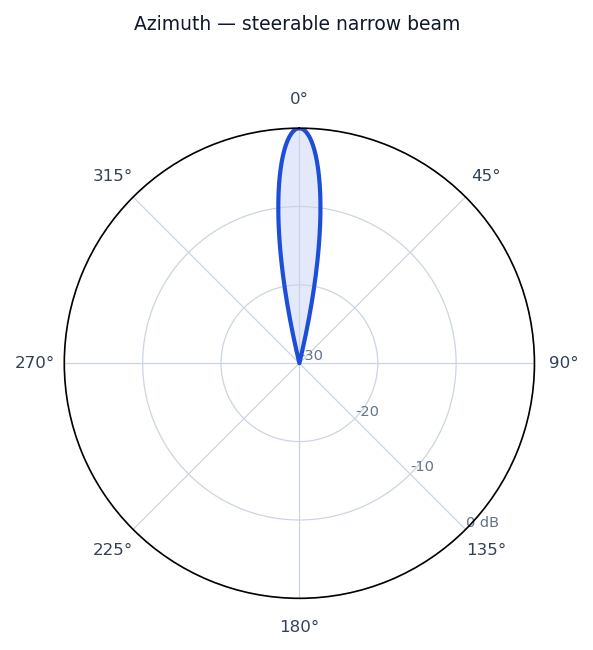
A phased array uses many small radiators whose individual feed phases (and often amplitudes) are controlled together. By advancing the phase progressively across the elements, the combined wavefront is tilted so the beam points in a chosen direction—without any of the antenna physically moving—and the same control can form nulls toward interference or split into multiple beams. Modern active arrays put a tiny amplifier and phase shifter behind every element, enabling near-instant, agile beam steering.
Real-world uses
Modern radar, 5G millimetre-wave base stations, satellite user terminals, and Starlink-style dishes.