Quarter-Wave Monopole
Vertical Antennas Beginner VHF 🔧 Buildable at home
A single vertical quarter-wavelength rod that works against a ground plane.
- Band
- LF to UHF (scaled to band)
- Gain
- ~5.15 dBi over a perfect ground
- Polarization
- Vertical
Photos
Radiation / wave patterns
New to these diagrams? How to read a radiation pattern →
How & why it works
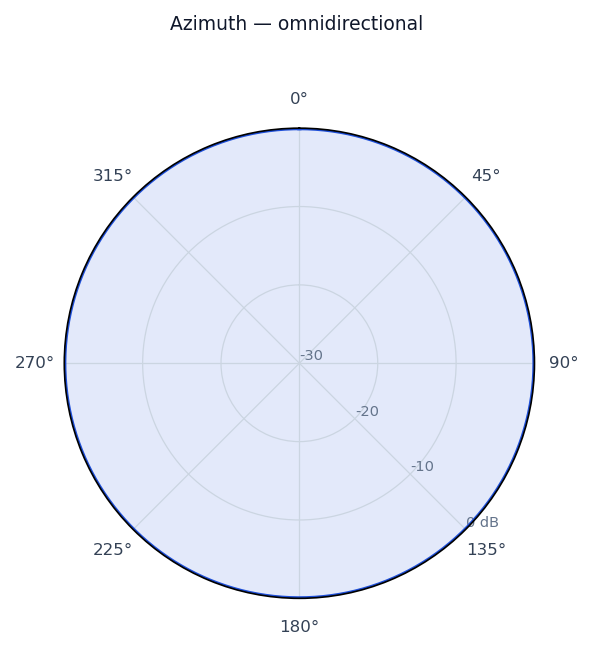
A monopole is effectively half of a dipole: a quarter-wave vertical element is mounted over a conducting ground plane, and the ground acts as an electrical mirror that reflects an 'image' of the element to complete the missing half. Because only half the structure is physically present, the radiation resistance is about 36 ohms and the pattern covers the upper half-space, radiating equally in all horizontal directions. The quality of the ground plane (radials, a vehicle body, or earth) strongly affects efficiency and the low-angle radiation that makes verticals good for distant contacts.
Real-world uses
AM broadcast towers, base-station whips, CB and amateur verticals, and handheld radios.
Make one at home
A practical starting point — always trim and check SWR for your exact frequency.
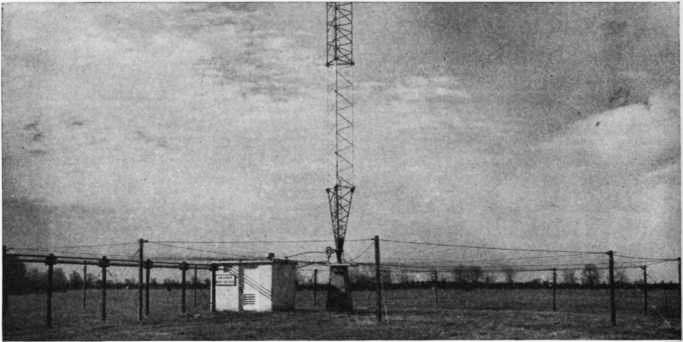
See the finished antenna pictured above ↑.
A quarter-wave monopole is the simplest vertical — one rod working against a ground.
You’ll need
- A vertical element (wire, rod, or telescoping whip): 71.5 ÷ f(MHz) metres
- A ground: a metal vehicle roof, a ground plane, or radials
- A coax connector (e.g. an SO-239) as the feed base
Build
- Connect the element to the coax centre conductor at the base.
- Connect the coax braid to the ground/radials.
- Mount it as high and clear as possible.
Tune
Feed impedance is ~36 Ω over a perfect ground. Trim the element for lowest SWR; a good ground system matters as much as the rod length.
Safety
- Keep antennas well clear of power lines — never put one where it could fall onto or contact mains wiring.
- Don’t transmit while anyone is close to the antenna; mind RF-exposure limits and your local licensing rules.
- Ground masts and use coax surge protection where appropriate.
- Cutting/soldering: eye protection and a ventilated space.