Secondary Surveillance Radar (Mode-S Beacon)
Aviation & Air-Traffic-Control Antennas Array Radar UHF Aviation
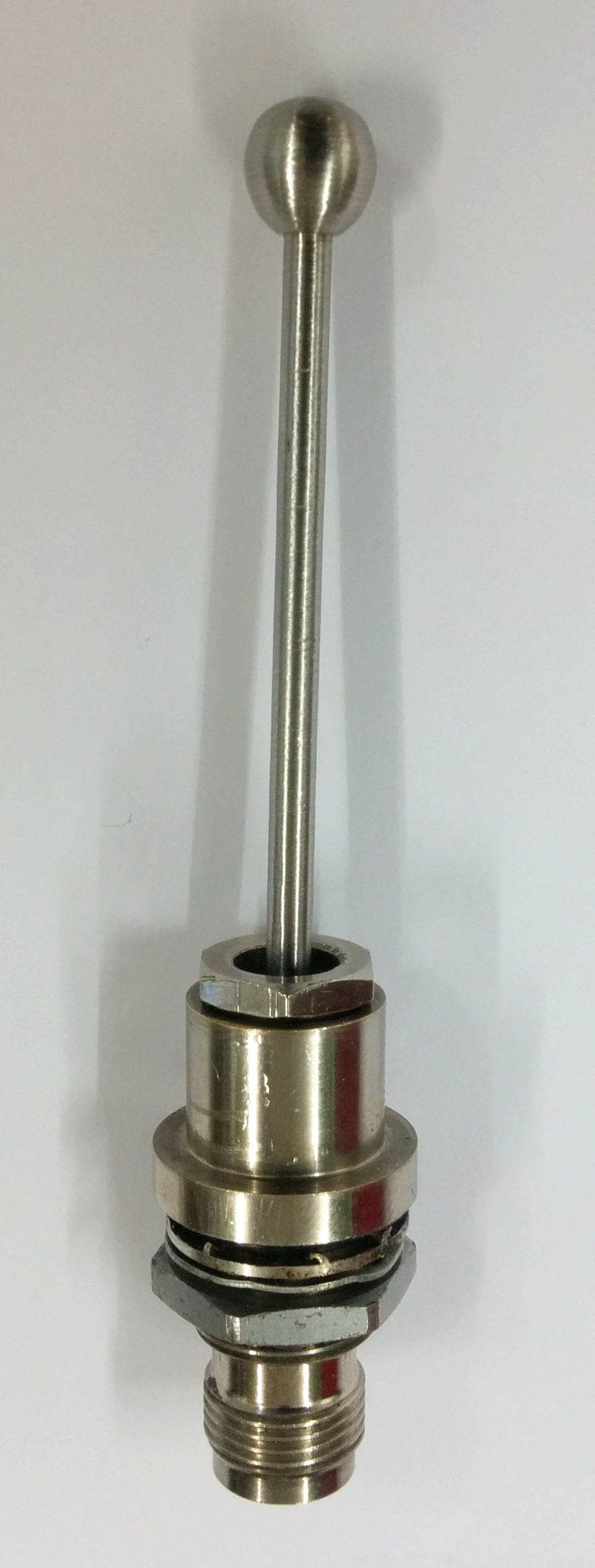
The long flat 'hockey-stick' array atop the radar that interrogates aircraft transponders.
- Band
- L-band (1030 MHz interrogate / 1090 MHz reply)
- Gain
- ~27 dBi (narrow azimuth fan)
- Polarization
- Vertical
Photos
Radiation / wave patterns
New to these diagrams? How to read a radiation pattern →
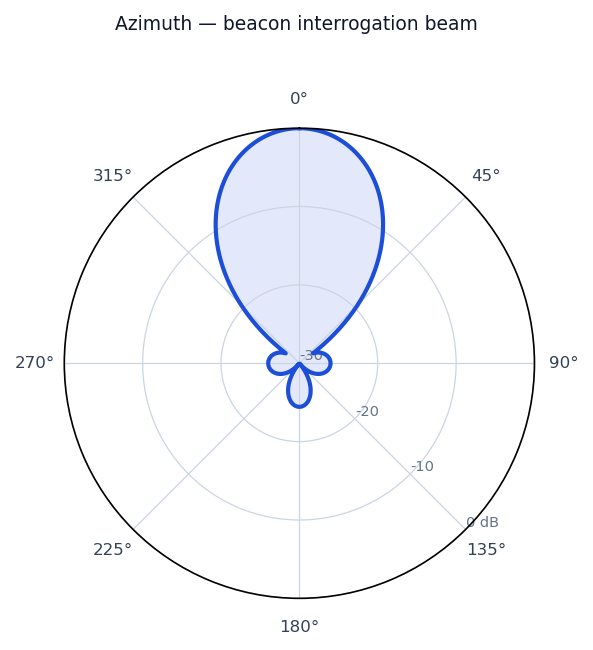
How & why it works
Secondary surveillance radar does not rely on skin echoes; instead it asks each aircraft to identify itself. A long, flat phased line array—often seen as the bar mounted on top of the primary radar reflector—transmits interrogations at 1030 MHz and the aircraft's transponder replies at 1090 MHz with its identity and altitude (and, with Mode-S, a unique address and richer data). The array forms a narrow azimuth beam plus a separate control pattern so the system can tell genuine main-beam replies from those entering the side lobes, which keeps identities from being smeared across bearings. Because the reply is an active transmission, far less power is needed than for primary radar.
Real-world uses
Aircraft identification and altitude reporting, ADS-B and TCAS, mounted on ASR primary radars.