Turnstile Antenna
Array Antennas VHF UHF Satellite Circular Polarization
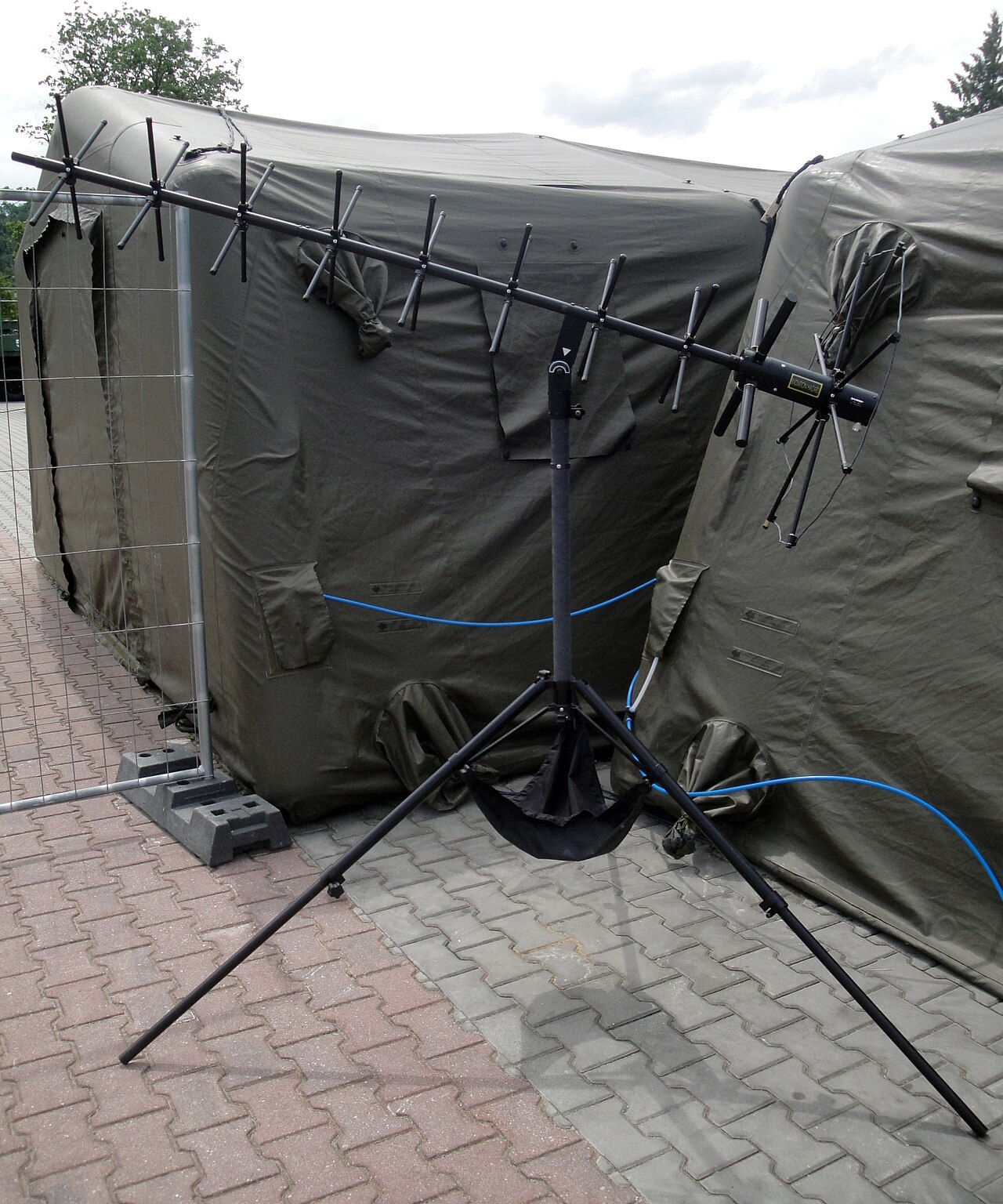
Two crossed dipoles fed in quadrature for circular or omnidirectional coverage.
- Band
- VHF/UHF
- Gain
- ~ 0-4 dBi
- Polarization
- Circular (axis) / horizontal (broadside)
Photos
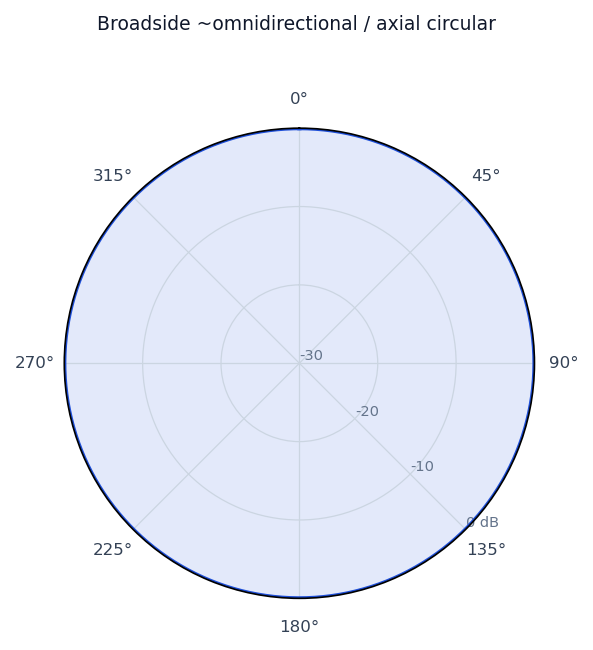
Radiation / wave patterns
New to these diagrams? How to read a radiation pattern →
How & why it works
A turnstile crosses two horizontal dipoles at right angles and feeds them 90 degrees out of phase. The quadrature feed makes their fields combine into a rotating, circularly polarized wave looking along the axis, while broadside the pattern is nearly omnidirectional—useful for working satellites that tumble or for even horizon coverage. Stacking turnstiles or adding a reflector ('eggbeater' and related designs) shapes the pattern toward the sky for low-orbit satellite work.
Real-world uses
Weather-satellite (APT/LRPT) reception, amateur satellites, and VHF broadcasting.